


“I was not treated as a victim. I was treated as a criminal.” —Hollie Nadel, sex trafficking survivor
Tiffany Simpson’s trafficker stabbed her and threatened to kill her unborn baby if she tried to run. He then forced her to assist him in recruiting another 13-year-old victim. Tiffany would go on to spend over a decade in prison for the crime he forced her to commit.
Hollie Nadel was trafficked for eight years and forced to commit financial crimes through violence and threats to her family. She finally escaped her traffickers—only via arrest. Nadel, a cum laude college graduate, has spent the rest of her life saddled with a criminal record and the barriers that come with it.
“Survivors should not be penalized for crimes they were compelled to commit as part of their exploitation.”
There are thousands of other sex trafficking victims punished for crimes they were forced to commit or, in Pieper’s case, committed to survive.
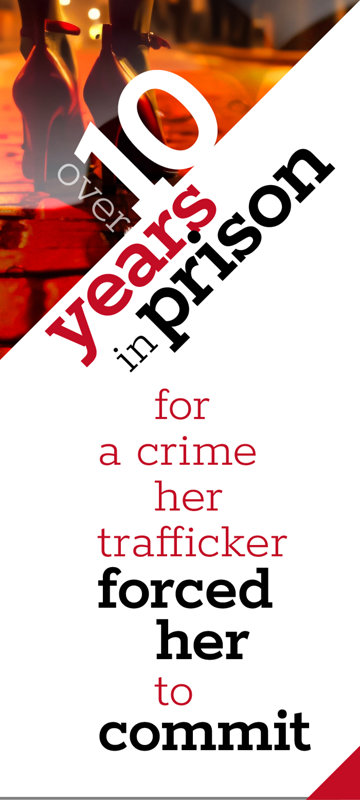
Nadel, now director of advocacy and engagement for the 3Strands Global Foundation, a nonprofit that supports survivors, put it this way: “Survivors should not be penalized for crimes they were compelled to commit as part of their exploitation. This still happens every day across the United States.”
But that injustice may soon be righted with the introduction of the Frederick Douglass Trafficking Victims Prevention and Protection Reauthorization Act.
Named in honor of the former slave who dedicated his life to fighting the buying and selling of human beings, the bill includes a non-punishment principle for victims forced into committing crimes by their traffickers.
The bill prioritizes prosecutions, increases child trafficking education and strengthens partnerships between federal, state and local authorities.
“This is about nameless, faceless individuals who are not here today … who are just a step away from being snatched or tricked or lured into some sort of evil situation,” cosponsor Rep. Kwesi Mfume said at an April 23 press conference on Capitol Hill.
Rep. Chris Smith, the bill’s author, framed the bill as a direct response to systemic failures that criminalize victims and foster trafficking situations. “This legislation is of, by and for them to help heal, restore and to empower,” he said.
House leaders are set to fast-track the bill, bringing it to a vote within two weeks.
If Congress follows through, the measure would mark a moral correction, one that begins to draw a clear line between those who exploit and those exploited.
For every wrongly criminalized victim like Nadel, Lewis and Simpson, there are thousands more for whom justice has been delayed, distorted or entirely denied.
The time is long overdue for Dr. Martin Luther King Jr.’s “arc of the moral universe” to bend toward justice for victims of trafficking. The question now is whether lawmakers will give it the final push it needs.