

Published in the Journal of the American Medical Association (JAMA) Health Forum, the study tracked 460,000 adolescents aged 13 to 17 until age 25. None had prior mental health problems; all began as “normal.”
Regardless of how one views the practice of modern psychiatric labeling and consequent drugging, the research demonstrates a correlation between cannabis and mental health struggles among teens.
With cannabis becoming more readily available due to legalization, teen use is at a 30-year high.
“We looked at kids using cannabis before they had any evidence of these psychiatric conditions and then followed them to understand if they were more likely or less likely to develop them,” said the study’s co-author, Dr. Lynn Silver of the Public Health Institute.
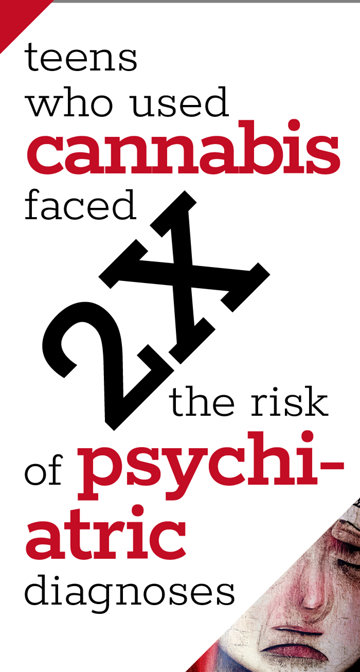
They found that teens who reported cannabis use in the past year faced twice the risk of receiving diagnoses of bipolar and psychotic disorders.
The study also linked teen cannabis use to other issues: depression diagnoses rose by about a third and anxiety diagnoses by about a quarter.
With cannabis becoming more readily available due to legalization, teen use is at a 30-year high.
“With legalization, we’ve had a tremendous wave of this perception of cannabis as a safe, natural product to treat your stress with,” Silver said. “That is simply not true.”
Earlier research had already established a link between cannabis use and mental health conditions, especially psychosis, but did not determine whether cannabis caused them or whether people experiencing them were more likely to use cannabis.
By excluding teens already diagnosed with disorders, the JAMA Health Forum study answered that question: There is a strong case for a causal connection between cannabis use and later mental health diagnoses.
Dr. Silver hopes the findings will make teens more cautious about using pot, now that the research clearly shows that lighting up that joint could send their future happiness up in smoke.